
SLS Powder Density Report
An in-depth analysis of powder bed packing density in Selective Laser Sintering (SLS) and its direct influence on mechanical properties and structural integrity.
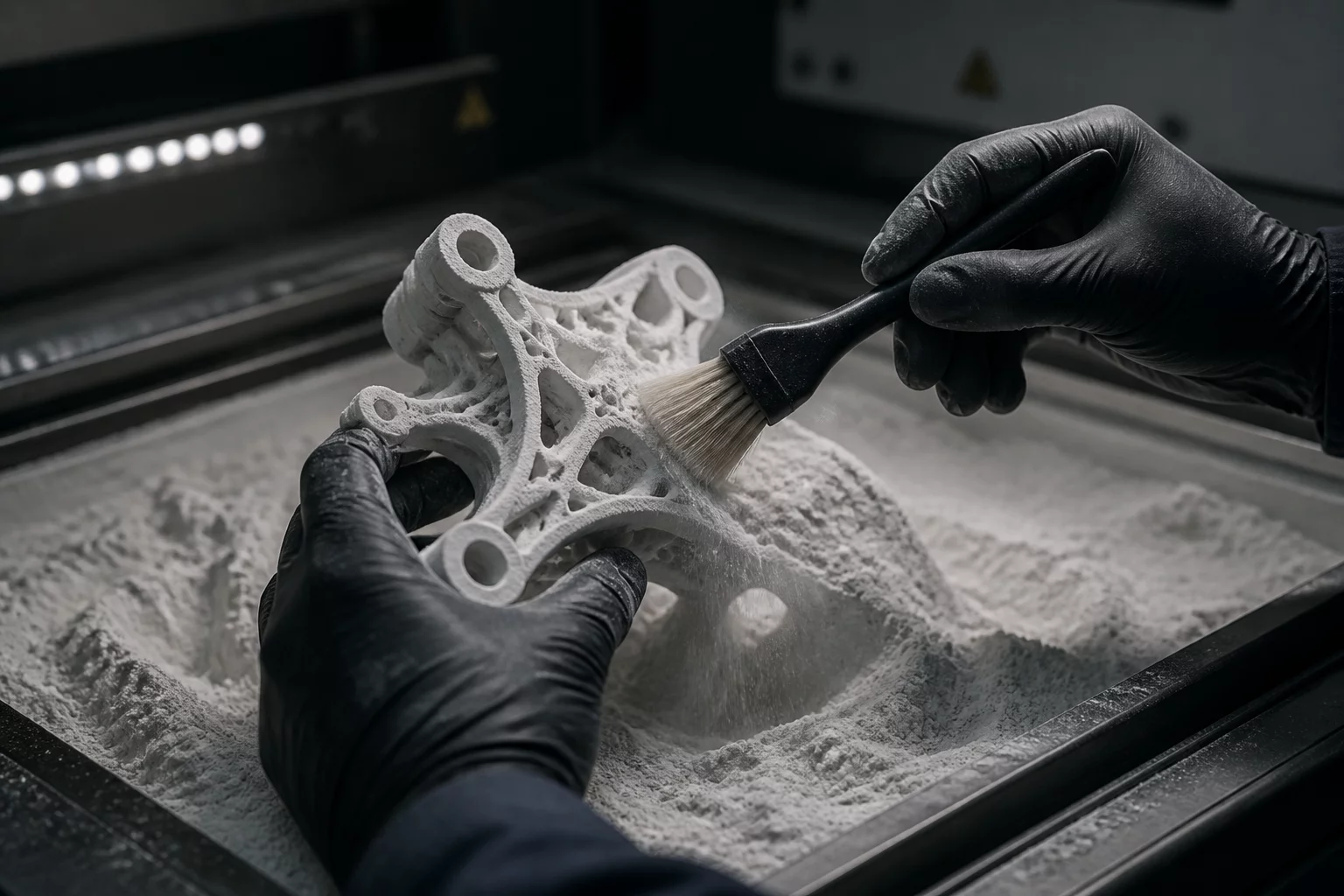
Powder bed density plays a critical role in Selective Laser Sintering (SLS), directly determining the mechanical properties and dimensional accuracy of sintered nylon components. Lower packing density leads to increased porosity and reduced tensile strength in the final parts.
The Core Correlation: Packing Density and Mechanical Integrity
During the recoating phase, the SLS system spreads a thin layer of thermoplastic powder across the build platform. Sintering requires a highly uniform distribution of particles. When powder density is insufficient, the laser beam vaporizes material or leaves microscopic voids. These voids act as stress concentrators under tensile loads, accelerating part failure.
Evaluating Roller Speed and Layer Thickness
Adjusting roller speed is the primary method for controlling powder bed compactness. High speed prevents particles from settling into a dense arrangement, creating microscopic air pockets. Decreasing roller velocity enables gravity to assist in packing, producing a more stable and dense bed.
Step-by-Step Optimization Protocol
- Measure the bulk density of the incoming Nylon PA12 powder batch.
- Calibrate the recoating speed to 80 millimeters per second.
- Maintain bed temperature at 170 degrees Celsius to prevent premature sintering.
- Analyze sintered test bars to determine absolute density and elongation at break.
Managing Powder Refresh Ratios
Reusing powder deteriorates particle shape, directly lowering bed density. Spherical virgin particles roll easily into dense layers, whereas degraded overflow powder has irregular geometries. Maintain a steady 50-50 refresh ratio to ensure consistent mechanical characteristics across successive builds.
Trial Discussion
0No comments yet. Be the first to leave a comment.
Add to the Context
To leave a comment, please log in to your account.