Nylon Moisture Impact
Analyzing mechanical degradation, surface finish anomalies, and interlayer bonding issues in polyamide prints caused by atmospheric water absorption.
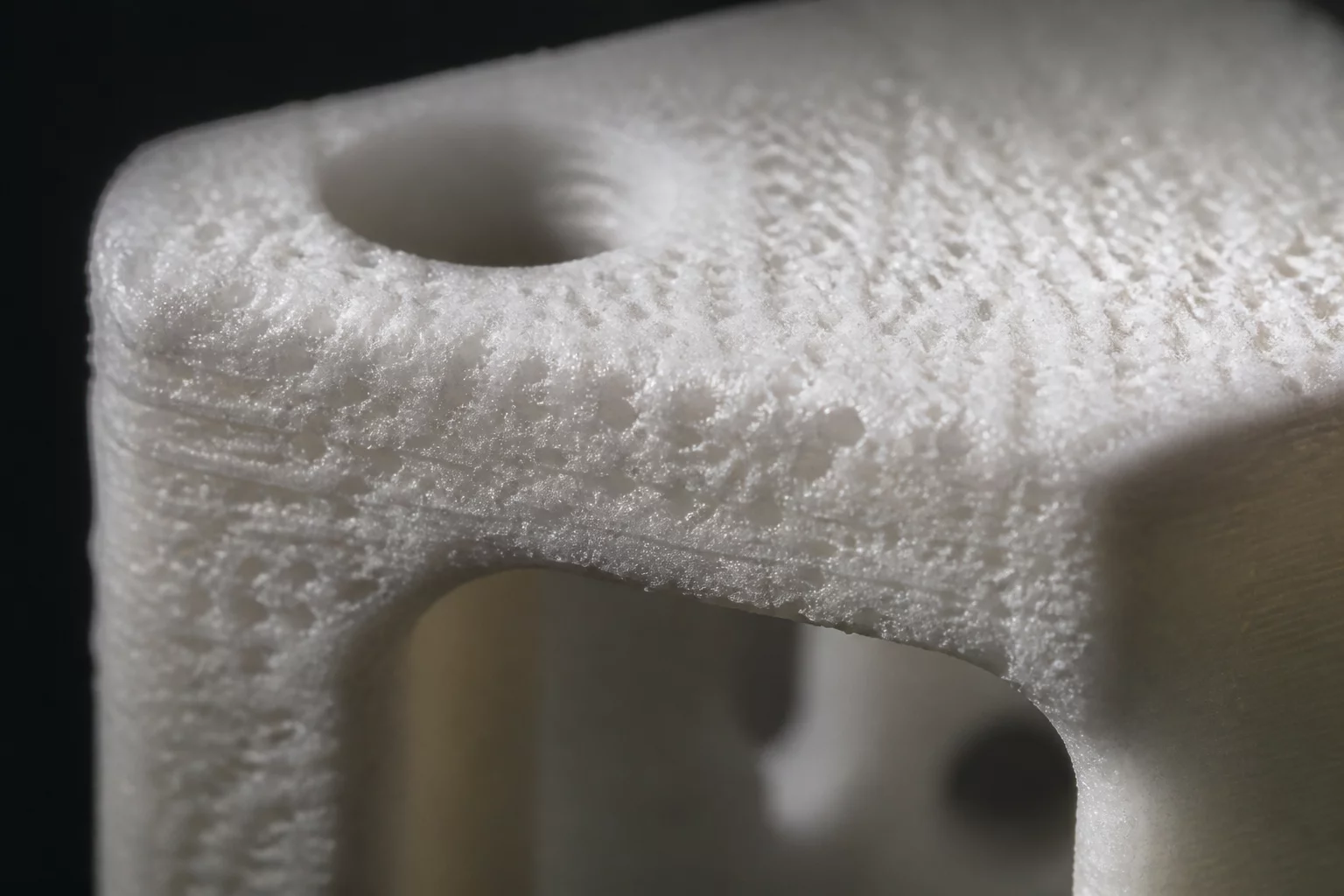
Nylon (polyamide) is one of the most hygroscopic materials used in 3D printing. It readily absorbs water from the surrounding atmosphere, often reaching saturation within a few hours of exposure. When wet nylon is fed into a heated extruder, the water trapped inside the polymer matrix rapidly vaporizes, expanding into steam bubbles. This explosive expansion disrupts the molten plastic flow, leading to structural voids, extreme stringing, poor layer adhesion, and a severely degraded surface finish.
The Science Behind Nylon's Hygroscopic Nature
Polyamides contain polar amide groups (-CO-NH-) in their molecular backbone. These groups form strong hydrogen bonds with water molecules from ambient air. Unlike other common filaments like PLA, nylon can absorb up to 10% of its weight in water depending on the specific grade (such as PA6 or PA12) and ambient humidity levels. This absorbed moisture acts as a plasticizer, lowering the glass transition temperature (Tg) and modifying the physical properties of the raw material before it even enters the nozzle.
Critical Symptoms of Wet Filament
Identifying moisture contamination early in the print cycle prevents wasted material and machine downtime. Look for the following indicators during your print runs:
- Audible Popping Sounds: Micro-explosions of steam escaping the nozzle orifice during extrusion.
- Foamy Extrusion: The extruded filament looks opaque, swamped with tiny bubbles, and lacks its typical semi-translucent gloss.
- Severe Drooling and Stringing: Internal pressure build-up from steam overrides retraction settings, causing continuous oozing.
- Reduced Tensile Strength: Interlayer bonding efficiency drops by up to 50%, making parts brittle and prone to delamination.
Standard Dehydration and Storage Guidelines
Restoring moisture-laden nylon to an printable state requires controlled thermal drying. Standard food dehydrators or dedicated filament ovens should be utilized. Bake the spool at 70°C to 80°C for a minimum of 12 to 24 hours. After dehydration, feed the filament directly from a sealed dry box containing active desiccant packets to maintain a relative humidity level below 15% during the entire print job.
Trial Discussion
0This could be your first comment. Share your observations or post-processing feedback with the engineering community.
Add to the Context
To leave a comment, please log in to your account.