PETG Stringing Review
Analyzing the root causes of fine plastic webbing in PETG prints and determining the optimal retraction, temperature, and speed parameters to achieve clean results.
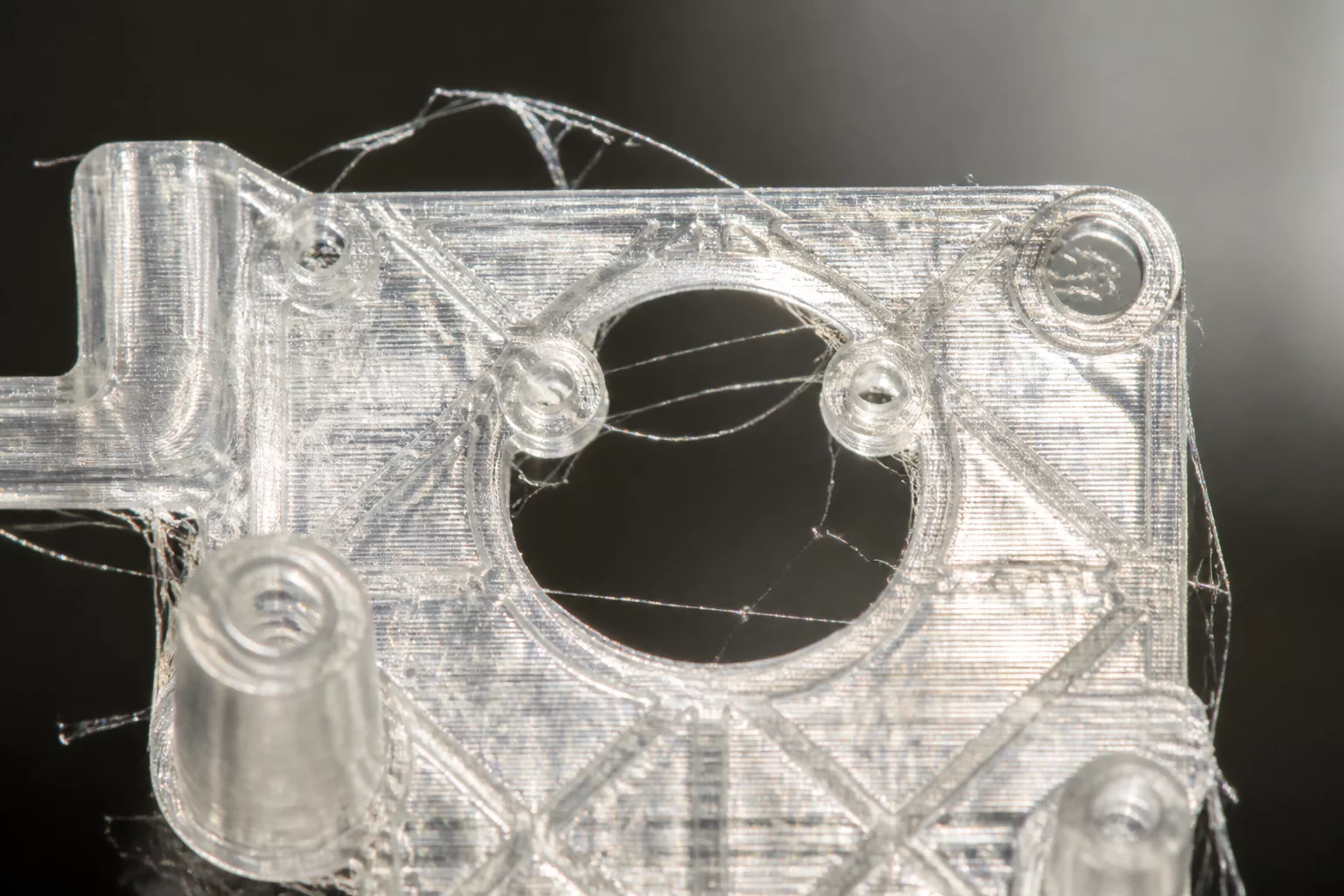
Stringing and oozing remain the most persistent challenges when printing with Polyethylene Terephthalate Glycol (PETG). Because PETG melts into a highly viscous and sticky liquid, it tends to cling to the nozzle tip and drag thin fibers across open spaces during travel moves. In this comprehensive review, we examine the physical mechanisms behind PETG stringing and outline the exact parameters needed to eliminate it.
Understanding the Cause of PETG Stringing
Unlike PLA, which has a sharper transition from liquid to solid, PETG remains sticky over a wide temperature range. When the extruder stops pushing filament and moves across a gap, gravity and residual pressure inside the hotend cause material to slowly ooze out. As the print head travels, this oozing plastic stretches into microscopic, hair-like fibers that solidify in mid-air.
Key Parameters for Eliminating Stringing
Optimizing your slicer settings in UltiMaker Cura is the most effective way to combat this issue. Based on our testing, four critical variables control the severity of the webbing:
- Retraction Distance: Direct drive extruders generally require 1.0 mm to 3.0 mm of retraction, while Bowden setups need between 5.0 mm and 7.0 mm to compensate for filament play inside the tube.
- Retraction Speed: Setting this value between 40 mm/s and 45 mm/s ensures the filament pulls back quickly enough to break the melt zone tension without grinding the plastic.
- Nozzle Temperature: Lowering the print temperature in increments of 5°C reduces fluidity. The sweet spot usually lies between 230°C and 240°C depending on the manufacturer.
- Travel Speed: Increasing non-printing travel speeds to 120 mm/s or higher minimizes the time the nozzle spends over empty spaces, giving the filament less opportunity to ooze.
The Impact of Filament Moisture
PETG is highly hygroscopic, meaning it actively absorbs water vapor from the surrounding atmosphere. When wet filament enters the hotend, the moisture turns into steam, causing micro-explosions and pressure spikes inside the nozzle. This extra pressure forces melted plastic out even during retraction moves. Drying your spool at 65°C for at least six hours is mandatory before attempting any calibration prints.
Trial Discussion
0No comments yet. Be the first to share your trial observations!
Add to the Context
To leave a comment, please log in to your account.