ABS Warping Context
An analysis of thermal contraction and bed adhesion failures in high-temperature FDM trials using Acrylonitrile Butadiene Styrene.
The Mechanics of Thermal Contraction in ABS
ABS is essentially a thermoplastic polymer that exhibits a high coefficient of thermal expansion compared to consumer-grade materials like PLA. When the molten plastic is extruded at temperatures exceeding 230°C, it immediately begins to lose thermal energy to the surrounding environment. This drop in temperature results in a significant volume reduction. If the part cools unevenly, the upper layers contract while the lower layers, anchored to the heated bed, remain stationary. This differential creates a bending moment that physically lifts the edges of the print.
Trial REV-04-ABS Observations
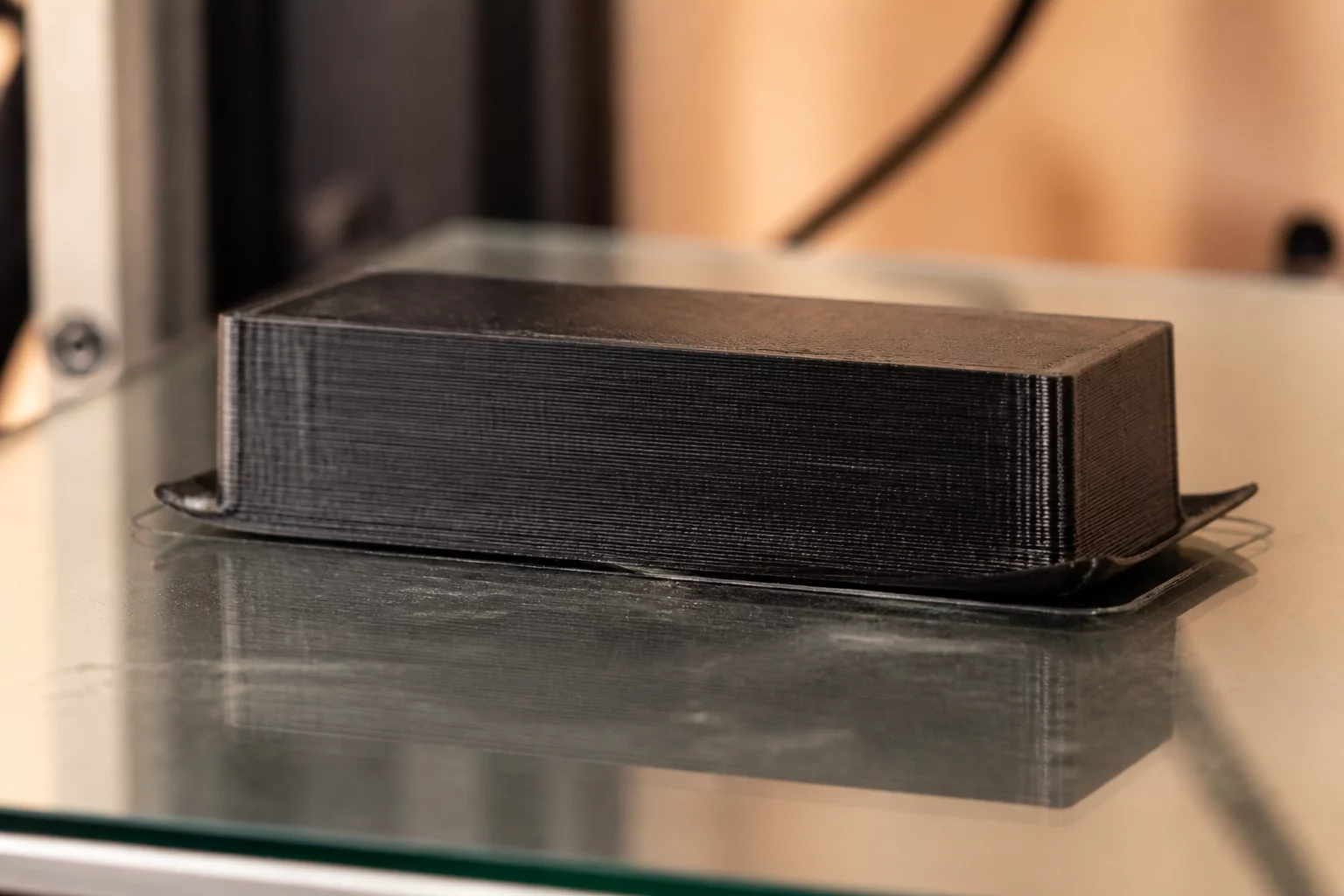
During the REV-04 trial, we printed a geometric calibration block designed to maximize internal tension. Initial adhesion on the PEI surface at 105°C appeared successful. However, at layer height 8.5mm, the cumulative force of contraction began to overpower the surface tension of the first layer. The sharp corners of the block lifted approximately 2mm off the build plate, leading to structural deformation and a subsequent nozzle collision during the final perimeter pass.
Enclosure Dynamics and Environmental Sensitivity
The trial confirmed that ambient air currents are the primary catalyst for severe warping. Even in a semi-enclosed printer, small openings allowed cooler air to penetrate the build volume. Observations showed that the side of the part facing the ventilation exhaust warped 40% more than the side facing the internal motor housing. Maintaining a consistent chamber temperature above 45°C proved necessary to mitigate these stresses during long print cycles.
Effective Mitigation Strategies
- Increase bed temperature to a range of 110°C to 115°C to keep the bottom layers above the glass transition temperature.
- Use a wide brim (8-12mm) to increase the surface area in contact with the build plate.
- Disable the part cooling fan entirely for the first 50 layers to prevent rapid thermal shock.
- Pre-heat the enclosure for at least 20 minutes prior to starting the extrusion sequence.
Trial Discussion
1James D. Sterling
06/18/2026This report highlights the exact issues we had with our aerospace shroud trial. We noticed that adding a draught shield in Cura further helped stabilize the chamber heat before we committed to a full enclosure upgrade.
Add to the Context
To leave a comment, please log in to your account.