Speed vs Quality Tradeoffs
Evaluating the critical dynamics between volumetric extrusion limits, surface finish precision, and mechanical strength in FDM 3D printing.
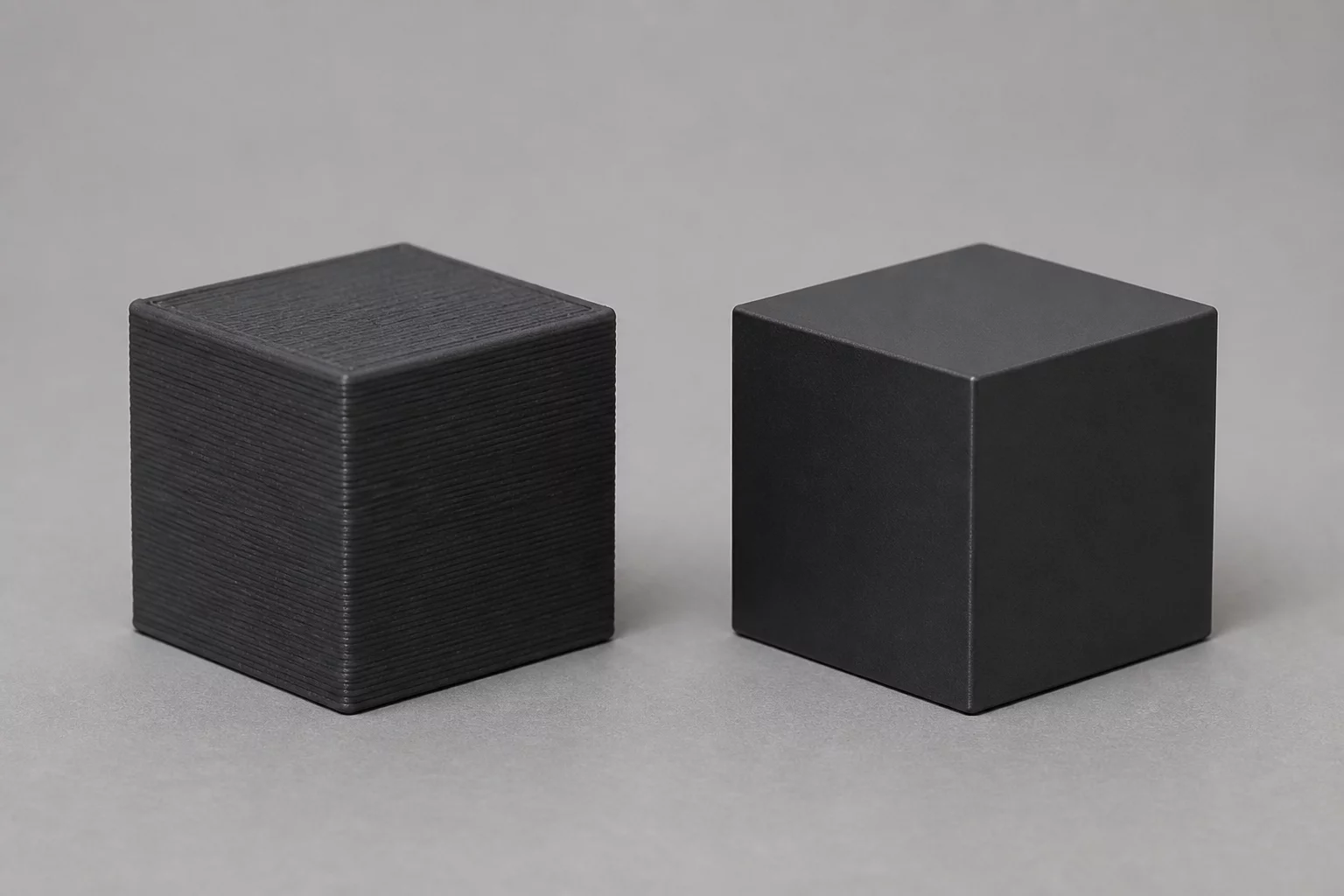
Every additive manufacturing project requires a deliberate choice between production throughput and final part fidelity. Increasing print speed reduces machine time and costs, yet it frequently introduces defects such as under-extrusion, ringing, and weakened layer adhesion. Understanding the physical dynamics of the extrusion hotend and mechanical motion system allows operators to balance these factors effectively.
The Physics of Flow Rates and Melt Zones
The volumetric flow limit of the hotend acts as the absolute speed governor in any 3D printer. When pushing plastic through a heated nozzle, the material requires a specific duration inside the melt zone to reach its transition temperature. Increasing speed without adjusting heater capacity leads directly to under-extrusion, as the solid filament core fails to melt completely before exiting the nozzle.
To maintain uniform extrusion at higher speeds, operators must calculate the maximum volumetric flow rate using the formula: layer height multiplied by line width and speed. Standard hotends sustain flow rates between 10 to 15 cubic millimeters per second, whereas high-flow alternatives with elongated melt zones reach 30 cubic millimeters per second or more.
Mechanical Inertia and Surface Artifacts
Rapid directional changes trigger mechanical resonance throughout the printer frame and belt system. This physical vibrations manifest on the printed surface as ghosting or ringing—wavelike patterns propagating outward from sharp corners and embossed features.
- Input Shaping Calibration: Using accelerometers to measure resonance frequencies allows the firmware to counteract vibrations, enabling higher speeds without visual artifacts.
- Acceleration Control: Lowering acceleration and jerk values on outer perimeters preserves crisp detail while leaving infill speeds high.
- Frame Rigidity: Securing the printer to a high-mass surface dampens physical oscillations before they reach the toolhead.
Layer Adhesion and Structural Strength
Fast prints suffer from lower structural integrity due to insufficient thermal bonding between layers. Each freshly deposited track of plastic must partially melt the layer beneath it to establish a strong polymer chain link. High print speeds reduce the contact time and increase cooling rate requirements, causing layers to split easily under mechanical load.
For functional components demanding maximum strength, print speeds should be reduced to ensure adequate thermal transfer. Alternatively, increasing the nozzle temperature by 5 to 10 degrees Celsius can compensate for the shorter heating duration, though this approach risks causing stringing and overhang drooping.
Trial Discussion
1James D. Sterling
08/02/2026The precision of the industrial design system described here is exactly what we need for our aerospace prototypes. The integration between technical handoff and the visual hierarchy looks seamless.
Add to the Context
To leave a comment, please log in to your account.