Record Expected Outcomes
Establishing a baseline for success by documenting predicted results before the nozzle starts moving to eliminate hindsight bias.
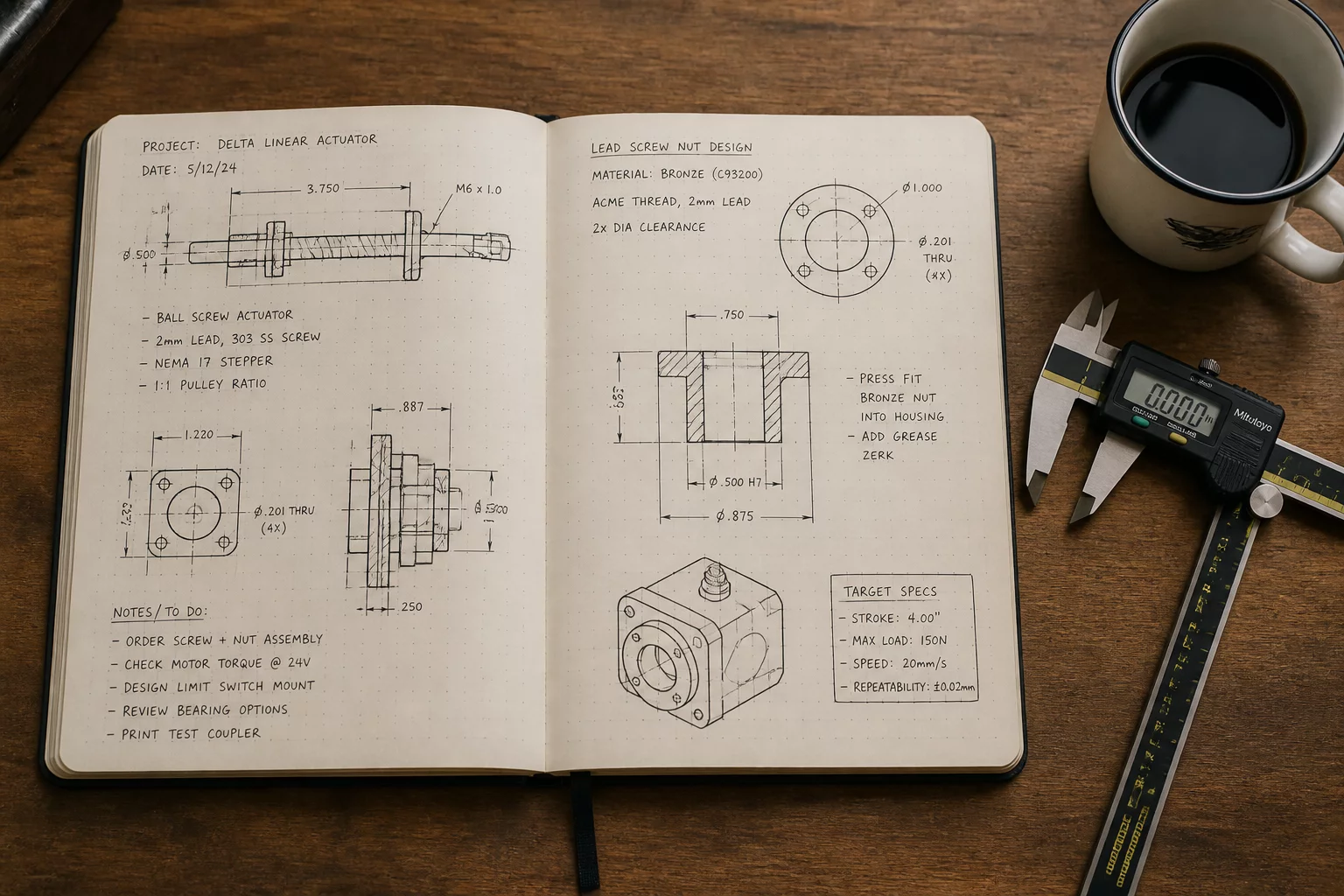
Recording expected outcomes is the most overlooked phase of 3D printing trial documentation. Before hitting 'Print' in UltiMaker Cura or any slicer, a professional engineer must state what they believe will happen because of a specific setting change. This simple act transforms a trial from a "see what happens" experiment into a rigorous scientific investigation. Without recorded expectations, we fall victim to hindsight bias—the psychological tendency to believe, after an event has occurred, that one would have predicted it correctly.
The Science of Anticipation
In additive manufacturing, a trial is usually a response to a problem or an attempt at optimization. By recording what we expect, we force our brains to clarify the hypothesis. For example, if you increase the retraction distance by 2mm to solve stringing, do you expect the stringing to vanish completely, or do you expect it to move from the base to the top of the pillars? Stating this beforehand allows you to measure the effectiveness of the setting change without moving the goalposts later.
Quantifying Success Metrics
Vague expectations lead to vague conclusions. When recording outcomes, avoid phrases like "better surface" or "stronger part." Instead, use quantifiable metrics or specific visual markers:
- Dimensional Accuracy: Expecting an outer diameter tolerance of ±0.05mm.
- Thermal Performance: Anticipating zero corner lifting with a 5°C bed increase.
- Interface Finish: Expecting support structures to peel away without leaving white stress marks.
- Speed vs. Quality: Expecting a 20% reduction in print time with no visible loss in layer adhesion.
Avoiding the "Trap of Obviousness"
Often, team members feel that the expected outcome is too obvious to record. They might say, "Obviously, I expect the bridge not to fail." However, recording this allows you to capture the *failure* of logic if the bridge still fails. It proves that the assumed 'obvious' solution (like lowering temperature) was not the correct lever to pull. This documentation serves as a permanent record for future engineers so they don't repeat the same logical mistakes three months later.
"If it isn't written down before the trial, it isn't a prediction; it's a reaction."
Integration with Handoff Notes
When you hand off a project to production, they need to know what the 'ideal' state was supposed to be. By sharing the original expected outcomes versus the final achieved results, you provide context for quality control. They can understand if a slight deviation in surface finish was a known trade-off for speed or an unexpected anomaly that needs further investigation.
Trial Discussion
1Mark Stevenson
07/19/2026I implemented the 'before-print prediction' rule in our lab last week. It has already stopped three redundant trials where the engineer realized their expectation didn't even match the physics of the material they were using.
Add to the Context
To leave a comment, please log in to your account.